Wall Street · Urbans Post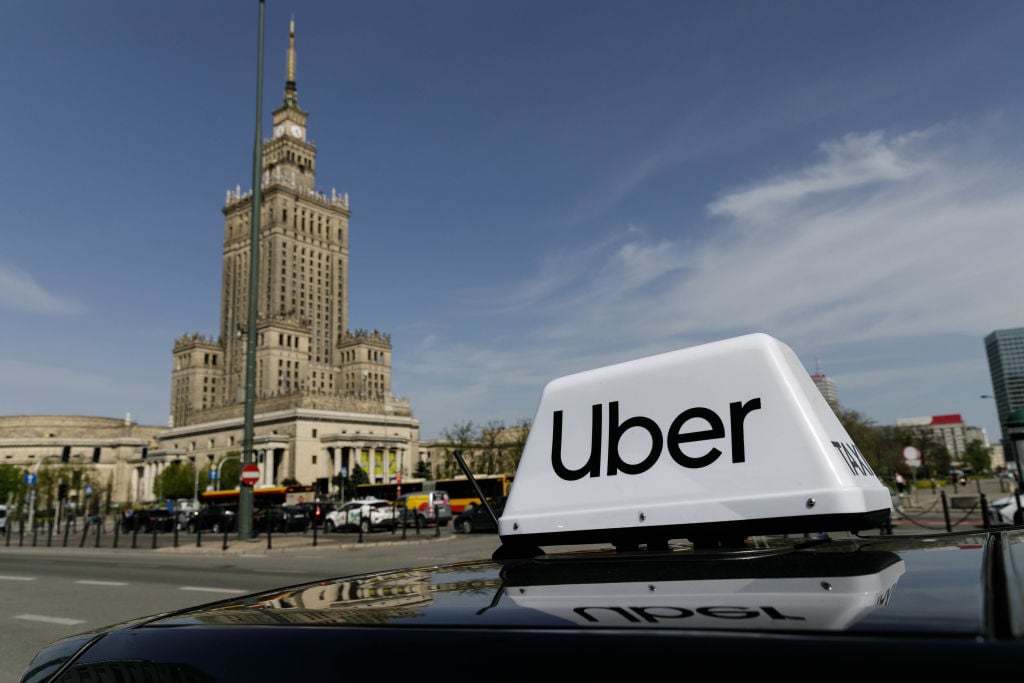
Bill Ackman's investment approach is to own high-quality businesses for the long haul. The hedge fund firm he founded more than two decades ago, called Pershing Square Capital Management, deploys this strategy with a concentrated portfolio. Retail investors can follow closely to find potential buying opportunities.
In January 2025, the billionaire investor started building a stake in a disruptive business. This growth stock now represents 12.7% of the entire $19 billion portfolio, making it the single largest holding. Ackman is sticking to his conviction, even though shares trade 31% below their 52-week high (as of Sept. 17).
Let's unpack what catalysts make this a worthy investment candidate before addressing the biggest risk factor and point of uncertainty. Image source: Getty Images. A low starting valuation and high earnings growth can be a winning combination Uber ( UBER -0.52% ) is one of the most impressive success stories in the mobile and smartphone age.
It identified a clear gap in the market, engineered a scaled technological platform, and has experienced tremendous adoption over the years. It's a leader in the mobility and delivery markets. Between these two segments, gross bookings totaled $56.5 billion in the last quarter (Q2, ended June 30).
And there are currently 208 million monthly active users on the platform, indicating wide usage. The stock has been on a disappointing run. But the valuation is extremely attractive now.
The forward price-to-earnings (P/E) ratio is 16.2. This is significantly cheaper than the overall market's valuation. And it's one of two factors that should push investors to buy shares.
The other variable to consider is profit growth. According to Pershing Square's research, Uber's earnings per share (EPS) are estimated to rise at a compound annual rate of 25% over the next three to five years. Strong user gains, greater order frequency, and new product and service announcements all lead to higher revenue.
Operating leverage then boosts the bottom line. If we assume that Uber's EPS will grow 25% per year from 2025 through 2030, while the stock's forward P/E multiple expands to 20, then the share price can soar by 277% in the coming five years. Premium Feature Moneyball Superscore 79 /100 Today's Change ( -0.52 %) $ -0.37 Current Price $ 70.50 Anxiety about autonomous vehicles Uber shares have been under immense pressure, probably because the market is full of fear, uncertainty, and doubt as it relates to autonomous vehicle (AV) technology.
Alphabet 's Waymo is the clear leader in the industry. Tesla 's Robotaxi is making steady progress. In a worst-case scenario for Uber, one that essentially renders the business worthless, these AV platforms would run massive car fleets all around the world, control user demand, be safer than human drivers, have broad adoption, provide a seamless experience, and charge very low prices.
I'd imagine everyone would likely agree that this would be a winning outcome for society. But that outcome doesn't seem probable anytime soon. AV rides currently account for just 0.1% of all ride-hailing trips globally.
In March, Waymo was completing more than 500,000 unsupervised rides per week. Last quarter, Uber handled 297 million trips each week on average. Progress for AVs will take time.
Uber is also operating from a position of competitive strength. It has a direct relationship with hundreds of millions of individuals, which enables it to aggregate demand. If there are multiple AV providers in the future that all become commoditized, Uber has value as a bundling solution.
I don't believe it's likely that consumers will have an affinity toward any single AV service, opting for the cheapest ride with the shortest wait time. AV rides are being offered in numerous cities across the country. But can they operate smoothly in non-urban areas?
And what about cold-weather climates? These are huge questions. Demand for rides also fluctuates dramatically depending on the time of the day and the day of the week.
Human drivers will be needed to address volatile usage trends, necessitating a hybrid network. Investors should pay attention to the risk that AVs might pose. However, this doesn't take away from the fact that Uber is a smart buy-the-dip candidate.
Source: The Motley Fool